
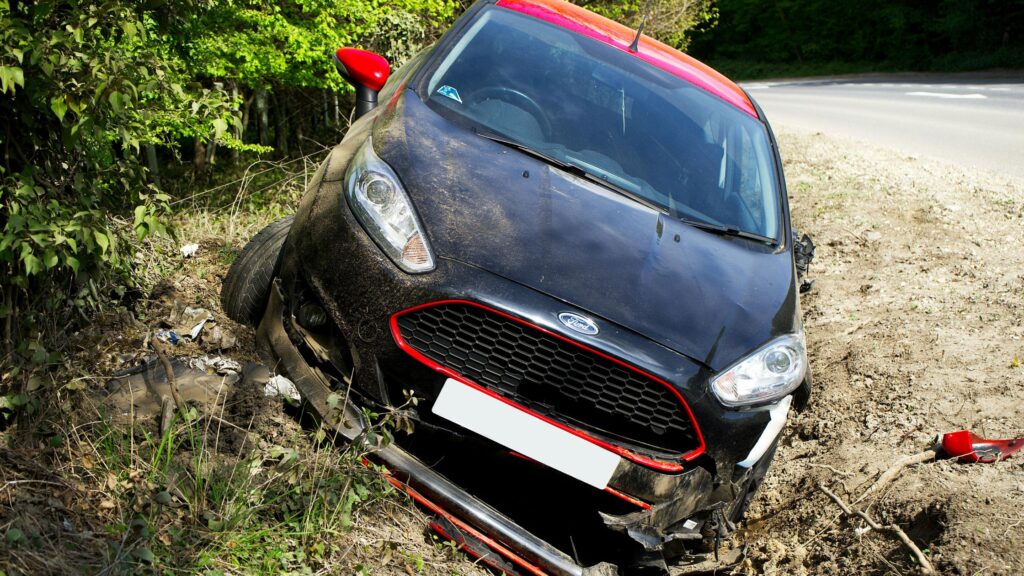
Would you like to know how long an accident stays on your insurance? Auto accidents are hard enough, but they become harder as their results might affect your insurance in a long-lasting effect.
Among the most frequently asked questions by drivers who have been involved in a crash is the duration in which an occurrence of such an accident would affect their car insurance rates.
Learning what your history entails as far as directly translating into premiums can help determine the costs in the future and will leave no surprises when the time to renew the policy comes.
The insurance companies consider accident history as a measure of risk. Once you make a claim, especially one that you were responsible for, your record can haunt you years later.
But the precise schedule varies between the state you reside in, the magnitude of the accident and the policy of the insurance.
The positive part is that it is not going to hurt your rates forever, and there are solutions that can reduce the effect.
This article endeavours to find out how many years an accident will remain in your record, hence, the subsequent increases in the premium, as well as what you can do to recover.
We also examine the impacts of accidents on your driving record and explore the possibilities of minimizing the penalty with time.
Now, let’s get started.
Does Your Insurance Go Up A Lot After A Claim?
Your insurance will increase when you make a claim, especially when you are to blame. The average rate goes up by 20 to 40 per cent as soon as an at-fault accident occurs.
This may increase how much you pay per year by several hundred dollars in terms of how you go and regulations in your state, as well as the kind of incident involved.
Insurance firms determine the amount of risk using your history. Once a claim is made, it is an indicator that you are a high-risk driver so that they can increase your premium.
Not every claim is held equally. In the case of a minor fender bender, the hike could be lower than a serious crash that involves injuries or damage to the property.
Other insurers allow you to enroll in an accident forgiveness program so that your first claim will not be used to increase your rates.
These, however, are normally offered to long-term, low-risk customers. When you are experiencing an increase in the rates, you can minimize the effect by requesting quotes, improving your rating, or combining the policies to receive a discount.
How Long Does An Accident Affect Your Insurance Rates?
The average car insurance company will hold an accident to your name between three to five years.
At this time, the accident can influence the calculation of your premium in case you are considered to blame.
Subsequently, after that window, the incident would tend to decline, and your rate might revert to a lesser value again (assuming that no new claims were presented).
The effective duration of impact depends on the insurer, as well as the state. In California and New York, accidents may affect your premium within 39 months, whereas in states such as Massachusetts, this may extend to a period of six years.
Beginning with the next renewal period, through a driving record that has remained without accident, you can start to enjoy progressive rate cuts.
Your history is re-measured by many providers every 6 to 12 months. You can also reduce your rate by taking defensive driving courses or enquiring about good driver discounts until the end of the penalty period.
ALSO READ – Who Accepts Oscar Insurance Near Me
Does A No-Fault Accident Still Affect Your Premium?
Indeed, a no-fault accident will likely influence your insurance rates, but to a lesser degree than in case you were at fault.
Although there are chances that your provider may not bill you on account of causing the accident, they will still take into consideration any claim activity when assessing your future insurance premium.
This is particularly so in the no-fault states where each insurance only covers their injuries, irrespective of the fault incurred.
Just because you were involved in an accident and made an insurance claim, you are, therefore, labelled a higher risk even when it was not your fault.
But this will vary depending on the guidelines of your company. One no-fault incidence might not be taken into consideration by some providers, whereas others might utilize it to effect a minimal increase in rates.
Should you wish to prevent any rate hikes, it is worth asking your insurance company to see whether there is a cost-effective advantage in paying out-of-pocket instead of filing a claim to repair the minor damage.
Can You Remove An Accident From Your Record Early?
An accident is not something you may clean off your record overnight, but there are some strategies on how you can minimize it in the long run.
There are insurers providing accident forgiveness as a bonus or benefit of clean driving. This is a bonus that allows your initial car accident to go under the radar without bumping up your rates. It is usually used once only.
The other alternative is to undergo a state-approved defensive driving course. In certain regions, one can get a portion of your points off of the license or earn rebates on your rate, thus depreciating the increment in the cost of the accident.
You also can consider using usage-based insurance packages that monitor safe driving behaviour to give you reduced rates.
Another prudent measure is to look at your driving record. In case it is not cleared within the planned time, call your DMV or insurance company to have its status.
Your premium might also be artificially increased in unusual instances due to clerical errors or old information.
ALSO READ – Do All Household Members Need To Be On Car Insurance With Progressive
Does An Accident Show On Your Driving Record Forever?
No, an accident is not recorded permanently on the driving record. In most states, reports on accidents are deleted after three to seven years after the incident, depending on the severity of an event and the issuance of any violations.
A small collision will readily fade away in comparison to a crash involving impaired driving or impaired driving offence.
Your insurance file and your driving record are two separate things, but they are related. The record that insurance companies collect about you is to determine your risk level, but the insurance company also keeps their history.
This implies that, even though your state DMV can clear your record, your insurance carrier will still recall a previous claim within some additional years.
In case you want to maintain a clean record to apply for a job or pass a background check, you should order a copy of it at your local DMV.
Also, you can discuss with your insurance agent how soon you will be able to have a re-rating, particularly when you have been accident-free for several years.
ALSO READ – Is Civil Car Insurance Legit
Final Thought
An accident may be kept in your insurance record for up to five years or more, depending on your state and your insurance policy.
Even though your premium will probably increase, you can control the effects and lower the cost in the future.
Regain control by driving safely, having a clean record, and pursuing a discount or forgiveness program to drive the costs back down.
Accidents occur, but they do not need to characterize your insurance profile forever. Take initiative, be in the know and shift the gears towards a progressive future.